Spring Minestrone Soup
Highlighted under: Natural Meals
I love making Spring Minestrone Soup during the warmer months when fresh produce is at its peak. The vibrant colors and flavors brighten up my meal, making it not only delicious but also visually appealing. This soup is a wonderful way to use seasonal vegetables like peas, asparagus, and greens, creating a comforting dish that feels light and refreshing. Each time I prepare it, I can’t help but savor the delightful combination of herbs and fresh ingredients that make this soup a staple in my kitchen.
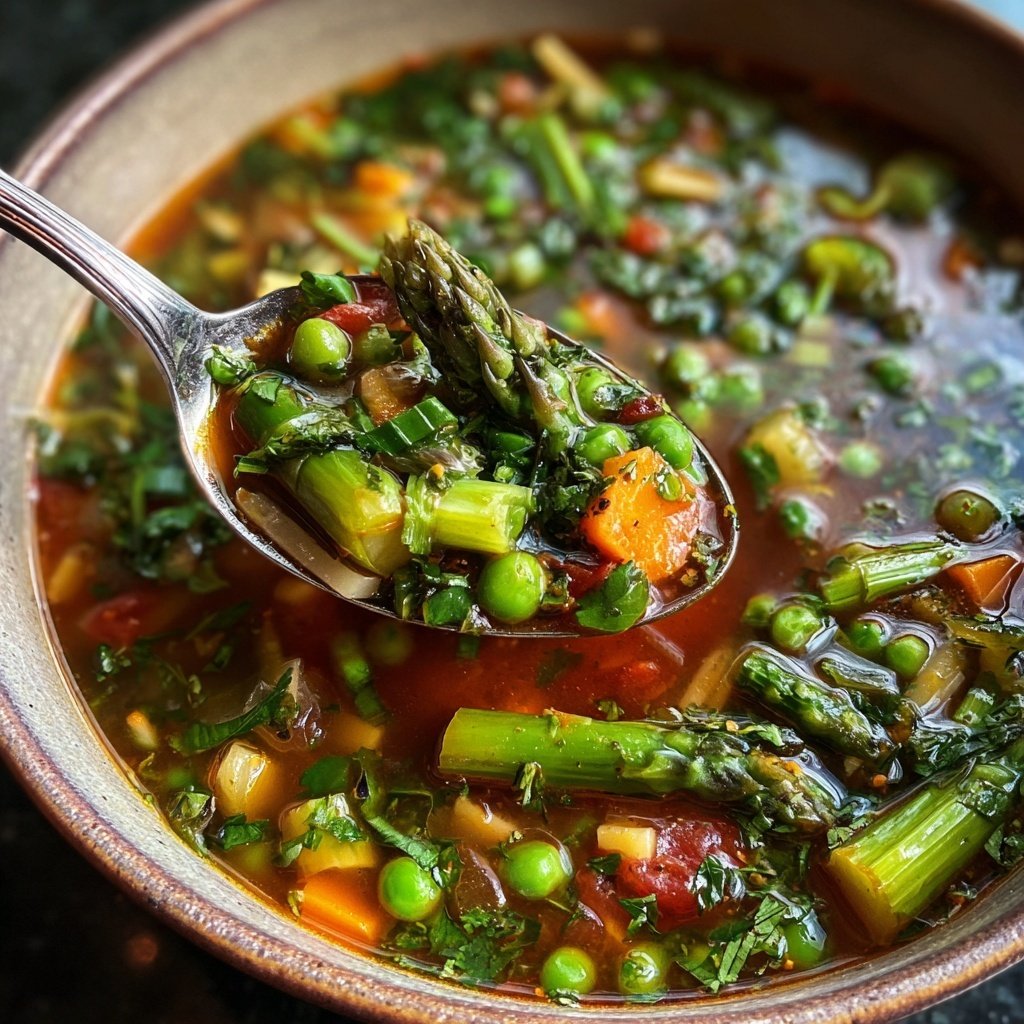
When I first made this Spring Minestrone Soup, I knew I had to share it with everyone. The burst of flavors from the fresh vegetables mingled with the herbs creates a fascinating taste that just feels like spring. I found that using homemade vegetable broth gives it an extra depth, elevating the soup to a comforting level that feels indulgent yet healthy.
One trick I've learned is to sauté the vegetables gently before adding the broth; this brings out their natural sweetness and enhances the overall flavor. By the end, the soup is not only hearty but also vibrant and colorful, making it perfect for gatherings or simply a cozy dinner at home.
Why You'll Love This Recipe
- A delightful mix of seasonal vegetables bursting with flavor
- Light yet hearty, making it perfect for any meal
- Easy to customize with your favorite veggies or pasta
Understanding the Ingredients
Each ingredient in the Spring Minestrone Soup plays a crucial role in balancing flavors and textures. For instance, the zucchini adds a subtle sweetness and a tender bite, while the asparagus contributes a fresh, grassy note. Fresh or frozen peas introduce a pop of color and sweetness, making them a delightful addition to this soup. When selecting ingredients, aim for those at their peak freshness to enhance not only taste but also visual appeal.
Using homemade vegetable broth can significantly elevate the flavor of your soup. A rich, homemade broth tends to have more depth and a personalized touch than store-bought varieties. If you're short on time, opt for a quality low-sodium store-bought broth. This allows you to control the salt levels better as you season your soup later to taste.
Cooking Techniques for the Perfect Soup
When sautéing the vegetables, it’s essential to use a large pot to provide ample space for even cooking. Medium heat is key here—if the heat is too high, your garlic can burn before the onions become translucent. Aim for a pot that’s large enough to hold all the vegetables comfortably, allowing them to cook evenly without overcrowding.
As the soup simmers, the flavors meld beautifully. Be sure to stir occasionally to prevent any sticking to the bottom of the pot, which can lead to bitterness. If you notice the soup thickening too much, add an additional cup of vegetable broth to maintain the desired consistency while keeping it light and refreshing.
Ingredients
For the Soup
- 2 tablespoons olive oil
- 1 onion, chopped
- 2 garlic cloves, minced
- 2 carrots, diced
- 2 celery stalks, diced
- 1 zucchini, diced
- 1 cup asparagus, chopped
- 1 cup green peas, fresh or frozen
- 4 cups vegetable broth
- 1 cup canned diced tomatoes
- 1 teaspoon dried oregano
- 1 teaspoon fresh basil, chopped
- Salt and pepper to taste
- Grated Parmesan cheese for serving (optional)
Instructions
Sauté the Vegetables
In a large pot, heat the olive oil over medium heat. Add the chopped onion and garlic, and sauté until translucent, about 3 minutes. Stir in the carrots and celery and cook for another 5 minutes, until softened.
Add the Broth and Tomatoes
Pour in the vegetable broth and canned tomatoes, followed by oregano and basil. Bring the mixture to a gentle boil.
Incorporate the Remaining Veggies
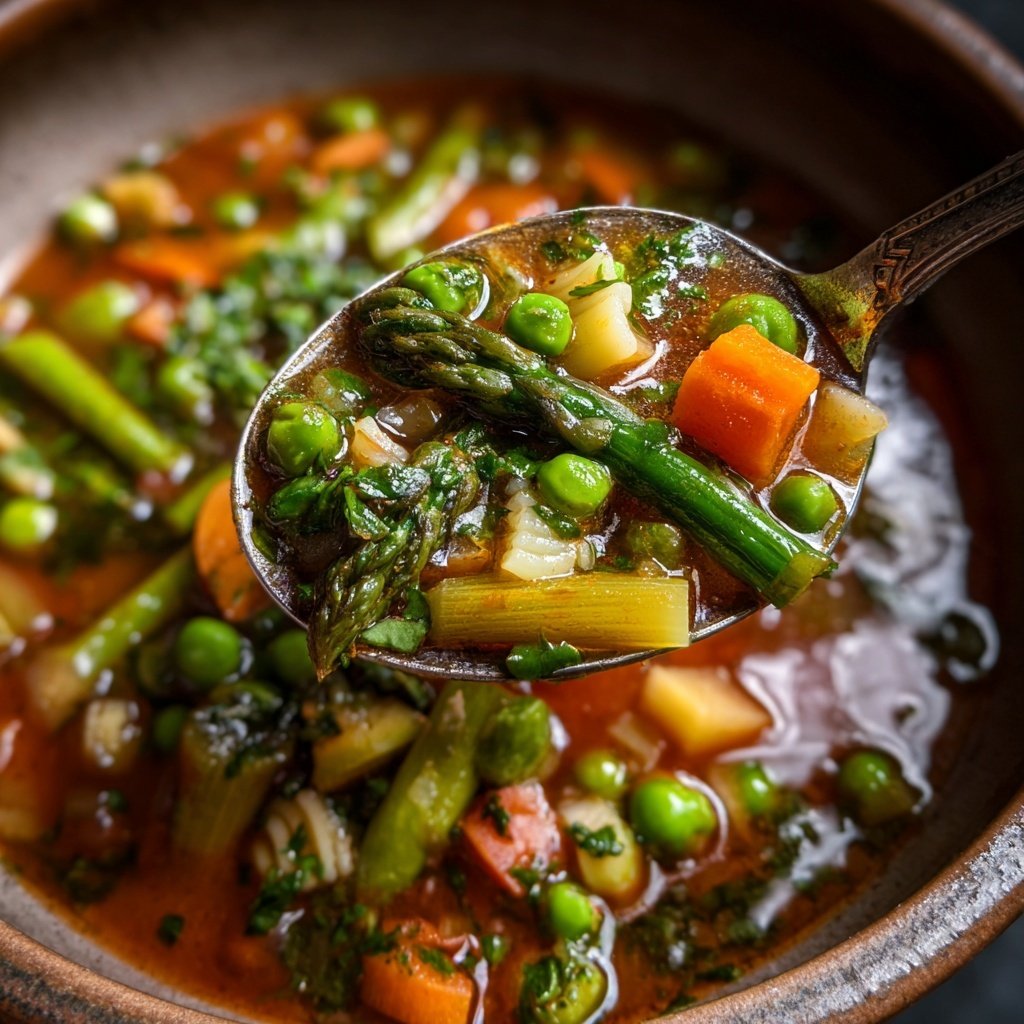
Add the zucchini, asparagus, and peas to the pot. Reduce heat to a simmer and cook for 20 minutes, stirring occasionally.
Season and Serve
Taste the soup and add salt and pepper as needed. Serve hot, garnished with grated Parmesan cheese if desired.
Pro Tips
- For a heartier soup, feel free to add pasta or beans to the mix. It's also great for meal prep
- just keep the soup base and add fresh veggies when ready to serve.
Serving Suggestions
To elevate your Spring Minestrone Soup, consider serving it with a drizzle of high-quality extra virgin olive oil on top just before serving. This adds a touch of richness and enhances the flavor profile even further. Pair it with crusty bread or a light salad for a complete meal that feels satisfying yet fresh.
For a delightful twist, serve the soup topped with a dollop of pesto. This not only adds an herby depth but also brings an additional layer of color and flavor that complements the vibrant veggies beautifully. A sprinkle of fresh herbs like basil or parsley can also brighten up your dish.
Storage and Make-Ahead Tips
This Spring Minestrone Soup can be made ahead of time, making it perfect for meal prep. Store it in an airtight container in the fridge for up to 5 days. The flavors will meld even further as it sits, enhancing the overall taste. Simply reheat on the stovetop over low heat, adding a splash of broth to achieve the desired consistency as needed.
If you prefer to make a large batch for freezing, allow the soup to cool completely before transferring it to freezer-safe containers. This soup can be frozen for up to three months. To reheat, thaw it overnight in the refrigerator and warm it on the stove over medium heat, stirring occasionally until heated through.
Questions About Recipes
→ Can I use frozen vegetables?
Absolutely! Frozen vegetables work just as well and save you prep time.
→ How can I make this soup vegan?
Simply skip the Parmesan cheese, and ensure that the broth is plant-based.
→ What can I substitute for zucchini?
You can replace zucchini with yellow squash or bell peppers for a different flavor.
→ Can I store leftovers?
Yes, store in an airtight container in the fridge for up to 3 days. Reheat on the stove for best results.
Spring Minestrone Soup
Created by: Opal Kensington
Recipe Type: Natural Meals
Skill Level: Beginner
Final Quantity: 4 servings
What You'll Need
For the Soup
- 2 tablespoons olive oil
- 1 onion, chopped
- 2 garlic cloves, minced
- 2 carrots, diced
- 2 celery stalks, diced
- 1 zucchini, diced
- 1 cup asparagus, chopped
- 1 cup green peas, fresh or frozen
- 4 cups vegetable broth
- 1 cup canned diced tomatoes
- 1 teaspoon dried oregano
- 1 teaspoon fresh basil, chopped
- Salt and pepper to taste
- Grated Parmesan cheese for serving (optional)
How-To Steps
In a large pot, heat the olive oil over medium heat. Add the chopped onion and garlic, and sauté until translucent, about 3 minutes. Stir in the carrots and celery and cook for another 5 minutes, until softened.
Pour in the vegetable broth and canned tomatoes, followed by oregano and basil. Bring the mixture to a gentle boil.
Add the zucchini, asparagus, and peas to the pot. Reduce heat to a simmer and cook for 20 minutes, stirring occasionally.
Taste the soup and add salt and pepper as needed. Serve hot, garnished with grated Parmesan cheese if desired.
Extra Tips
- For a heartier soup, feel free to add pasta or beans to the mix. It's also great for meal prep
- just keep the soup base and add fresh veggies when ready to serve.
Nutritional Breakdown (Per Serving)
- Calories: 220 kcal
- Total Fat: 7g
- Saturated Fat: 1g
- Cholesterol: 0mg
- Sodium: 400mg
- Total Carbohydrates: 34g
- Dietary Fiber: 8g
- Sugars: 6g
- Protein: 9g